

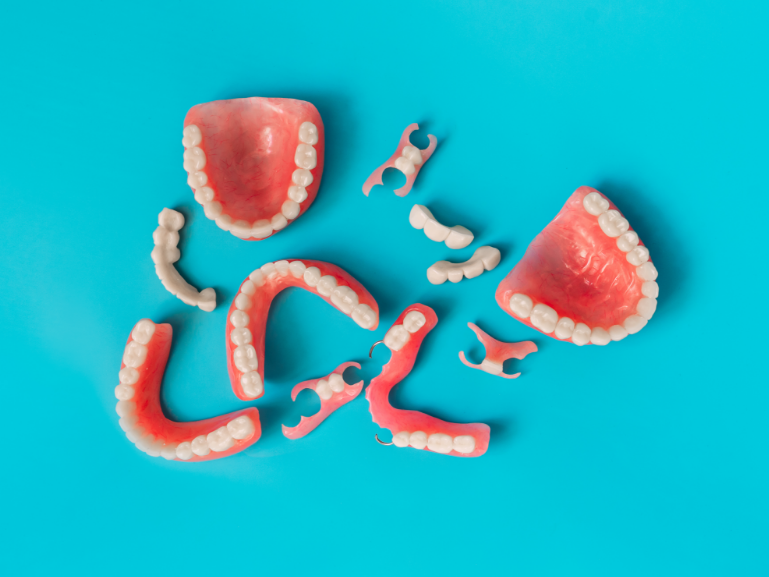
Losing teeth can be life-changing, and for many people, replacing them doesn’t happen right away. Whether it’s due to cost, health issues, or uncertainty about options, some patients go years without teeth before exploring dentures. A common concern that comes up is jawbone loss—and whether it means dentures are no longer possible.
The reassuring news is that even if you’ve been without teeth for a long time, dentures may still be an option. Modern dentistry offers several ways to work around jawbone changes and restore your smile.
What Happens to the Jawbone After Tooth Loss?
When teeth are removed, the jawbone no longer receives stimulation from chewing and biting. Over time, this causes the bone to shrink and weaken, a process known as bone resorption. The longer teeth are missing, the more noticeable this bone loss can become.
Jawbone loss can affect facial shape, making the lower face appear sunken or aged. It can also change how dentures fit, which is why some people worry they’ve waited too long.
Can Bone Loss Prevent You from Getting Dentures?
In most cases, jawbone loss does not automatically disqualify you from getting dentures. Traditional dentures are designed to rest on the gums, not the bone itself, so many patients with bone loss can still wear them successfully.
That said, significant bone loss can affect how stable dentures feel. They may be more likely to slip or feel loose without careful design and ongoing adjustments. A thorough evaluation helps determine the best approach for comfort and function.
Denture Options for Patients with Bone Loss
For patients with mild to moderate bone loss, conventional dentures may still work well with proper fit and regular maintenance. In cases of more advanced bone loss, implant-supported dentures may be recommended.
Implant dentures are anchored to dental implants placed in the jawbone, which helps stabilize the denture and reduces movement. Because implants stimulate the bone, they can also help slow further bone loss over time.
When Bone Grafting May Be Helpful
If jawbone loss is severe, a bone graft may be considered before placing dental implants. A bone graft adds volume and strength to the jaw, creating a more stable foundation for implants.
Not every patient needs a bone graft, and not every patient wants implant dentures. A personalized treatment plan helps balance comfort, health, and long-term goals.
Why It’s Never Too Late to Ask
Many people assume they’ve missed their window for tooth replacement, but that’s rarely the case. Advances in denture materials, implant technology, and treatment planning have made it possible to restore smiles at nearly any stage.
The most important step is simply starting the conversation. No matter how much time has passed, options still exist to help you eat, speak, and smile with confidence again.
About the Practice
Smiles of Memorial is a dental practice in Houston focused on patient-centered care and long-term oral health. The practice is led by Dr. Viet “Vince” Tran, DMD, who brings advanced training and a compassionate approach to every smile he treats. Dr. Tran earned his degree from the LECOM School of Dental Medicine and completed an advanced residency at the Orlando Veterans Affairs Medical Center, where he developed surgical skills, implant placement experience, and full mouth rehabilitation expertise. He makes patient comfort and individualized care a top priority, taking time to listen to concerns and craft treatment plans that align with each person’s goals. Outside of dentistry, Dr. Tran enjoys hiking, volunteering, exercising, and spending time with his rescued dog, Nola. Smiles of Memorial provides comprehensive dental services, emphasizing comfort, trust, and lasting results for patients and families in the Houston area.
Call us at (281) 493-0061 or request an appointment online.