

Dental Implants Houston
Giving Patients a Better-Quality Smile

Without a doubt, all of our office’s tooth replacements work quite well. You can expect good results whether you get dentures, dental bridges, or any other prosthetic. Still, you should consider dental implants in Houston if you want excellent substitutes for your missing teeth. These small posts will make your smile whole and beautiful, as they combine great looks with lifelike function. As for the specifics, learn more about them by reading below, or book a consultation!
Why Choose One Smiles of Memorial for Dental Implants?
- Dentist Who Can Place Dental Implants In-House
- Flexible Financing Options Available
- Top-of-the-Line Materials Used for Natural Appearances
What Are Dental Implants?
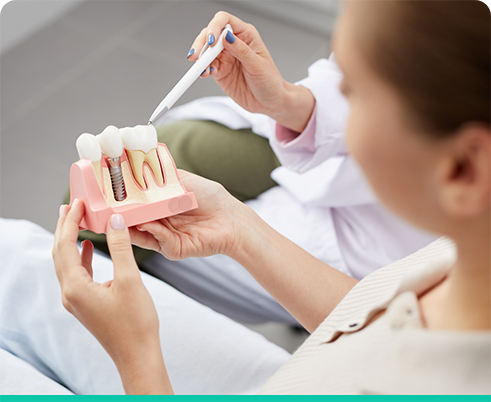
Dental implants are, at their core, tooth-sized posts made of high-grade titanium. Their primary role is to replace the roots of a patient’s missing teeth.
Notably, dental implants work differently from other tooth replacements. Unlike dentures or (regular) dental bridges, they’re set in your jaw’s empty sockets; they don’t just sit on your gums. This design lets the posts fuse with your jaw and become permanent parts of your mouth. In other words, each implant remains secure and faces little or no risk of slipping or falling out.
The 4-Step Dental Implant Process
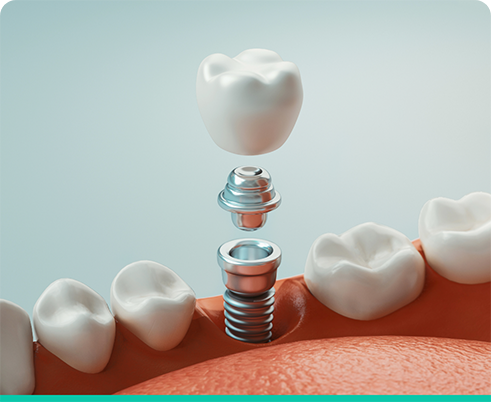
Here at our practice, the dental implant process consists of four crucial steps. These are:
- Initial Dental Implant Consultation – You’ll meet Dr. Tran to discuss how treatment might work. In that talk, our team may conclude you’re eligible for dental implants right away. On the other hand, we may decide you need specific preliminary procedures first.
- Dental Implant Surgery – After the consultation, you’ll undergo dental implant surgery at our office. This work involves complex tools and places each post in your jawbone.
- Dental Implant Osseointegration/Abutment – Your dental implants will fuse with your jaw in the months after surgery. Once that process concludes, we’ll place your posts’ abutments.
- Delivery of Dental Implant Restoration(s) – For the last phase of treatment, we’ll place your final restoration. This device could be a crown, bridge, or denture, and it’ll blend seamlessly with your smile.
Benefits of Dental Implants

As the gold standard of tooth replacement, dental implants have superior benefits and effects. Why else would dentists place about 500,000 of them yearly? Due to their design, these posts can do things that other prosthetic teeth simply can't. As for the specific benefits of dental implants, rest easy; our team will gladly share them with you. Just keep reading to learn the details, or call us to hear more over the phone.
Day-to-Day Benefits

Once your dental implants fully fuse, you’ll enjoy their day-to-day benefits. These include the following:
- Gorgeous Looks – Since they have porcelain surfaces and fuse with your jaw, dental implants look and behave like natural teeth. Onlookers won’t notice they aren’t “real.”
- Higher Confidence – Dental implants will boost your confidence when they restore your smile. After all, the posts make your grin look good and free you of worries about eating, speaking, etc.
- Easy Eating & Speaking – By fusing with your jaw, dental implants restore most (if not all) of your bite force and become permanent. That means the posts help you eat and speak as you usually would.
- Low Maintenance Levels – Compared to dentures and dental bridges, dental implants involve much less maintenance. You can care for them with standard hygiene habits like twice-daily brushing and once-daily flossing.
Health Benefits

When their daily perks stop standing out, you should notice dental implants’ health benefits. The more notable ones are:
- Tooth Support – Left untreated, ‘smile gaps’ can tilt your other teeth until they fall out. The good news is that dental implants “fill in” such spaces.
- A Stronger Jaw – Over time, tooth loss will cause your jaw to erode and lose density. Dental implants prevent (and reverse) this erosion, stimulating your jawbone’s tissue.
- Improved Oral Health – If you leave smile gaps alone, they’ll house bacteria that cause cavities and gum disease. Thankfully, dental implants get rid of those gaps (and their bacteria) when they restore your grin.
- Better Nutrition – Once dental implants fuse with your mouth, they restore your bite force and let you chew tougher foods. The result is that they improve your nutritional health.
Long-term Benefits
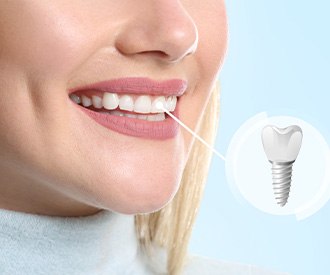
Of course, dental implants have more than just everyday and health-related upsides. They also have long-term benefits, including:
- A High Success Rate – Dental implants nearly always succeed, especially when placed by good dentists. Their ten-year success rate is even known to reach 98%!
- Enduring Effects – Thanks to their titanium bases, dental implants can potentially work for a lifetime. Average ones alone can last 15-20 years, while well-maintained posts endure for 30 years or more.
- Cost-Effectiveness – Though they have a higher upfront price, dental implants save you more money than other prosthetic teeth. Their enduring effects (see above) ensure they rarely ever need repairs or replacements. To that extent, they let you keep money otherwise spent on follow-up care.
Who Dental Implants Can Help

As the gold standard of tooth replacement, dental implants have superior benefits and effects. Why else would dentists place about 500,000 of them yearly? Due to their design, these posts can do things that other prosthetic teeth simply can't. As for the specific benefits of dental implants, rest easy; our team will gladly share them with you. Just keep reading to learn the details, or call us to hear more over the phone.
Who Is a Good Candidate for Dental Implants?

As we mentioned above, dental implants are extremely versatile, so most patients with missing teeth can receive them. The only caveat is whether dental implant surgery can happen right away. For example, if the remaining teeth you do have are damaged beyond the point of repair, your jawbone isn’t strong enough to support dental implants, or there is an active infection in your gums, then the necessary preliminary care will need to be provided first. Rest assured, this will all be discussed during an initial consultation with Dr. Tran.
Missing One Tooth

Previously, missing one tooth was accomplished with a dental bridge. Now, there is another option: a single dental implant. This involves us placing a dental implant into the open space. Then, after the implant and jawbone have fused together, we will secure a custom dental crown on top.
Since you will have to wait a few weeks or months to receive your custom-made crown, Dr. Tran will place a temporary, removable crown on your post. This natural-looking cap will serve as a placeholder until we set the permanent crown in position.
Missing Multiple Teeth
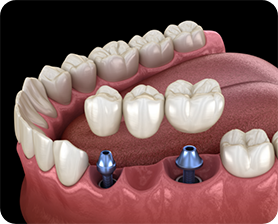
If you’ve lost three (or more) consecutive teeth, Dr. Tran may recommend an implant bridge. This tooth-replacement solution is secured in position with dental implants instead of crowns, so it can treat large smile gaps. It’s also self-supporting, so we won’t have to alter your nearby teeth to keep it securely in place!
If your missing teeth aren’t adjacent, we’ll likely advise a partial implant denture. This smile-rebuilding solution is also customized to guarantee it suits your face shape, dental needs, and aesthetic goals, ensuring the final result looks and feels extremely lifelike.
Missing All Teeth
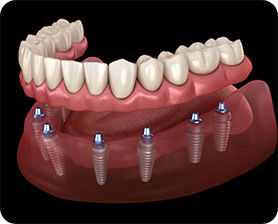
Patients who’ve lost (or will lose) all their teeth should look into a full implant denture. Relying on a few well-placed posts, this appliance can restore a whole arch all at once. There are several benefits that come with this smile-rebuilding treatment, including that it won’t slip or slide unexpectedly, it only uses a few posts to make the treatment process less invasive, and it can last longer than a traditional denture with the proper care and maintenance.
Dental Implant Crowns & Bridges
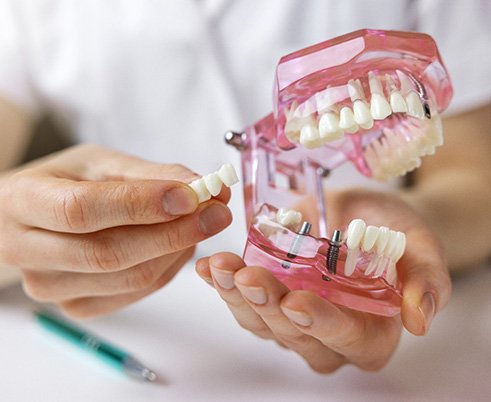
While single dental implants are great, sometimes they just aren’t enough. A patient’s smile gap may be too large for an individual post to fill. In those sorts of cases, we advise that patients use dental implant crowns and bridges. These combined appliances can remove your grin’s gaps all at once, ensuring your smile looks pretty and whole again. For more details on them and their parts, just keep reading below!
What is an Abutment?
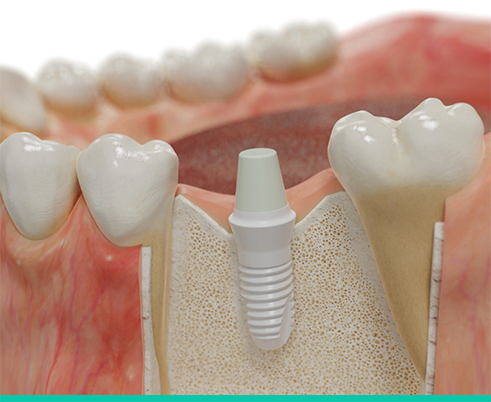
Once your dental implant has been placed, Dr. Viet Tran will place an abutment on top of the dental implant. This abutment will be the piece that connects the implant to the dental implant crown.
What is a Dental Implant Crown?

A dental implant crown is a custom-created replacement tooth made to match your natural teeth. Dr. Viet Tran will take a molding of the tooth and create a new dental crown to place on top of the abutment.
What is a Dental Implant Bridge?
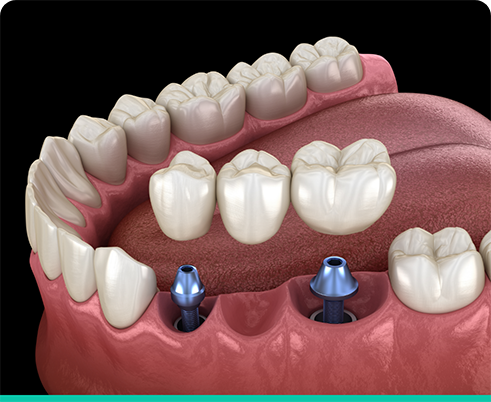
A dental implant bridge is very similar to a regular bridge, but instead of connecting to surrounding teeth, the bridge is supported by the implants. Dental implant bridges are usually used when you are missing more than one tooth.
When you need dental implant crowns, bridges, and abutments in Houston, Texas, go to Smiles of Memorial. Dr. Viet Tran and his expert staff will answer all of your questions. Schedule a consultation today to see if they’re the solution for you!
Bone Grafting
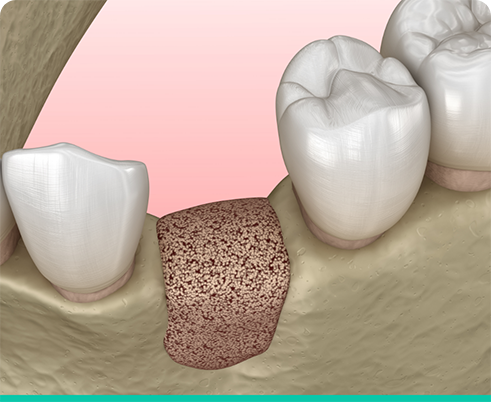
If your jawbone has eroded from tooth loss, you may need a bone graft before dental implant surgery. This procedure adds new tissue to your jaw to increase its density. Through that addition, your jawbone will have the strength needed to keep your implant post stable. You wouldn’t even have to worry about long-term side effects; the grafting material is slowly absorbed by your body and replaced by your own new bone tissue.
Of course, only Dr. Tran can confirm whether you need a bone graft. He’ll cover that detail during your consultation.
Understanding the Cost of Dental Implants
While you may trust dental implants, you should still consider the price of getting them. (A treatment that “breaks the bank” won’t offer much long-term help.) Just note that you’ll need to visit us for the estimate, as the cost of dental implants varies by patient. We’ll find ways to make your care affordable once you have, as well as outline your treatment’s price factors. Our team can also share helpful payment options with you, including our dental financing program.
Dental Implant FAQs
How Long Do Dental Implants Last?
They are designed to be a long-term solution. With proper care and maintenance, they can last a lifetime. However, individual factors such as oral hygiene, overall health, and lifestyle habits can influence the longevity of your implants.
Are Dental Implants Suitable for Everyone?
We can confidently say that they are a versatile option for individuals who have lost one or more teeth. Conditions such as uncontrolled gum disease, inadequate jawbone density, and certain systemic health issues may affect the suitability of dental implants. Assessment of your oral health is essential to determine if you are an ideal candidate for implants.
How Long Does It Take to Get Dental Implants?
The dental implant process can vary in duration depending on individual circumstances. After the implant is placed, it takes several months for the implant to fuse with the jawbone in a process called osseointegration. This healing period can range from a few months to six months. After the implant has been integrated successfully, the restorative phase can begin, which may take a few weeks to complete.
Are Dental Implants Easy to Care For?
They require regular care, similar to natural teeth. This includes brushing and flossing daily, as well as regular dental check-ups and cleanings. Additionally, it is important to avoid habits such as smoking, as they can compromise the long-term success of the implants.
Are There Risks Associated with Dental Implants?
Dental implants are generally safe and have a high success rate. However, as with any surgical procedure, there are potential risks and complications. These can include infection, damage to surrounding structures, nerve injury, implant failure, or implant rejection. It is important to discuss any concerns with your dental professional before undergoing the procedure.
Will Dental Insurance Cover the Cost of Dental Implants?
Dental insurance plans offer varying coverage for implant procedures. Some may provide partial coverage, while others don’t cover it at all. It is recommended to check with your health insurance provider to understand your specific coverage. To manage the cost of implants, financing options may be available.